
How to Get Sumner County Court Records
District files live with one office. The Clerk of the District Court in Wellington keeps the criminal, civil, family, probate, juvenile, traffic, and small-claims dockets. Start with Kansas CaseSearch, the public screen for district case information. Some items never appear there. For those, the clerk counter, the courthouse public terminal, or a mailed written request are the working routes, and a phone call settles routing and current copy instructions. The office posts no public email. Ask before sending a form by email or fax.
- Identify the court, case number, document, and event or filing date.
- Search CaseSearch or use the courthouse terminal to locate the register entry.
- Call 620-326-5936 to confirm custodian, access state, copy type, and delivery.
- Visit or mail the clerk at 501 N. Washington, Wellington, KS 67152.
- Submit the official KORA form if directed and request a fee estimate.
- Keep the response, invoice, certification page, and attachments together.
Municipal cases stay with the issuing city clerk. Federal records sit in PACER or with the federal clerk, while land, tax, and police files each answer to a separate office.
Use the Sumner County District Court Checkbox
The official Kansas request form lets you aim the clerk at one file. That beats a vague hunt. Check the County District Court box for a Sumner County district case. Fill in your name, address, and contact details. Add your delivery choice, your signature, and the date. Under “Records Requested,” list the case number, the document label, and the filing date. The form also carries a commercial-use certification and a clerk-only field for estimated reproduction costs.
Skip the phrase “all records” when a single judgment or journal entry settles the matter. Tight wording helps the clerk find the file. The clerk can then apply Rule 22, estimate charges, and send a certified copy rather than a portal printout when certification is what you need.
Types of Sumner County Court Records
“Court record” covers two things. It may mean the index that points you to activity, or one specific paper behind an entry, so ask for the formal item by name.
- Register of action or events-index printout.
- Complaint, petition, information, citation, answer, motion, response, notice, or proof of service.
- Journal entry, signed order, judgment, sentencing entry, or final disposition.
- Transcript or recording through a separate reporter or court process.
- Public exhibit, attachment, filing receipt, or file-stamp confirmation.
- Plain or certified copy of a public final order.
Sensitive files complicate things. Family, probate, juvenile, and protection cases can show public headings while their papers stay restricted, and an entry naming an attachment never promises that the attachment is online or open.
Sumner County Case Information, Events, and Documents
Think in three layers. A search screen shows basic case data. The register of action, which Rule 22 calls an events index, walks the dated procedural path, while the case file holds the permitted pleadings, exhibits, orders, and other documents. Even so, a public index can stay visible when a paper is excluded.
| Layer | Best use | Limit |
|---|---|---|
| CaseSearch screen | Locate court, number, roles, judge, events, settings | Not certified and not every record is online |
| Register or events index | Follow activity through later orders | A brief line does not reproduce a filing |
| Court file | Read a permitted pleading, order, or judgment | Redaction, older storage, and fees may apply |
For formal proof, ask first which item the recipient actually requires. “Proof of disposition” can mean a certified judgment, a journal entry, or a register printout rather than a picture of a screen.
What a Sumner County Court Record Contains
What's inside depends on case type and access status. Newer files carry numbers like SU-2026-CV-000127, built from county, year, type, and sequence. Older records use other number formats. Ask the clerk if a number gets rejected.
| Case header | Court, number, type, filing date, status, and permitted caption. |
|---|---|
| Roles | Public party roles, attorneys, judge, and division. |
| Pleadings | Public petition, complaint, answer, motion, response, notice, and service. |
| Events index | Dated filings, settings, continuances, orders, and disposition. |
| Orders | Signed rulings, journal entries, judgments, or sentence when public. |
| Attachments | Exhibits only when available and not restricted or redacted. |
Read entries in context. A motion entry is only a request, not a ruling, and a scheduled hearing is not proof the hearing happened.
Paper, Microfilm, and Sumner County eCourt Files
A case's age changes your route. Newer eCourt files may expose more electronic material, but Rule 22 still limits which documents appear. Older cases can sit on paper or microfilm. The Kansas Historical Society archive describes the early Sumner County records and microfilm holdings it keeps.
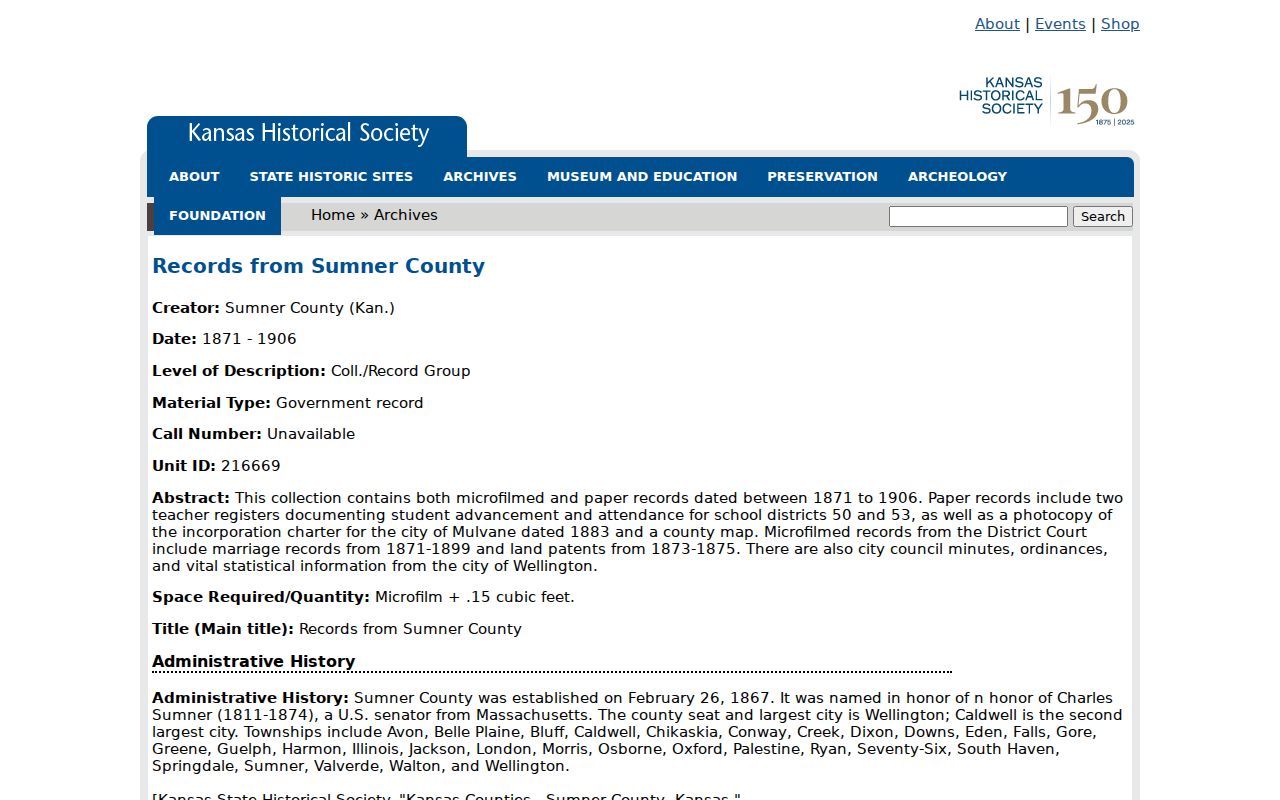
A missing PDF proves nothing. The archive listing shows Sumner County records surviving where no electronic copy exists, so ask which official office holds the year and series you need. The Kansas eFlex portal is the authorized filing entrance, not a public search worklist.
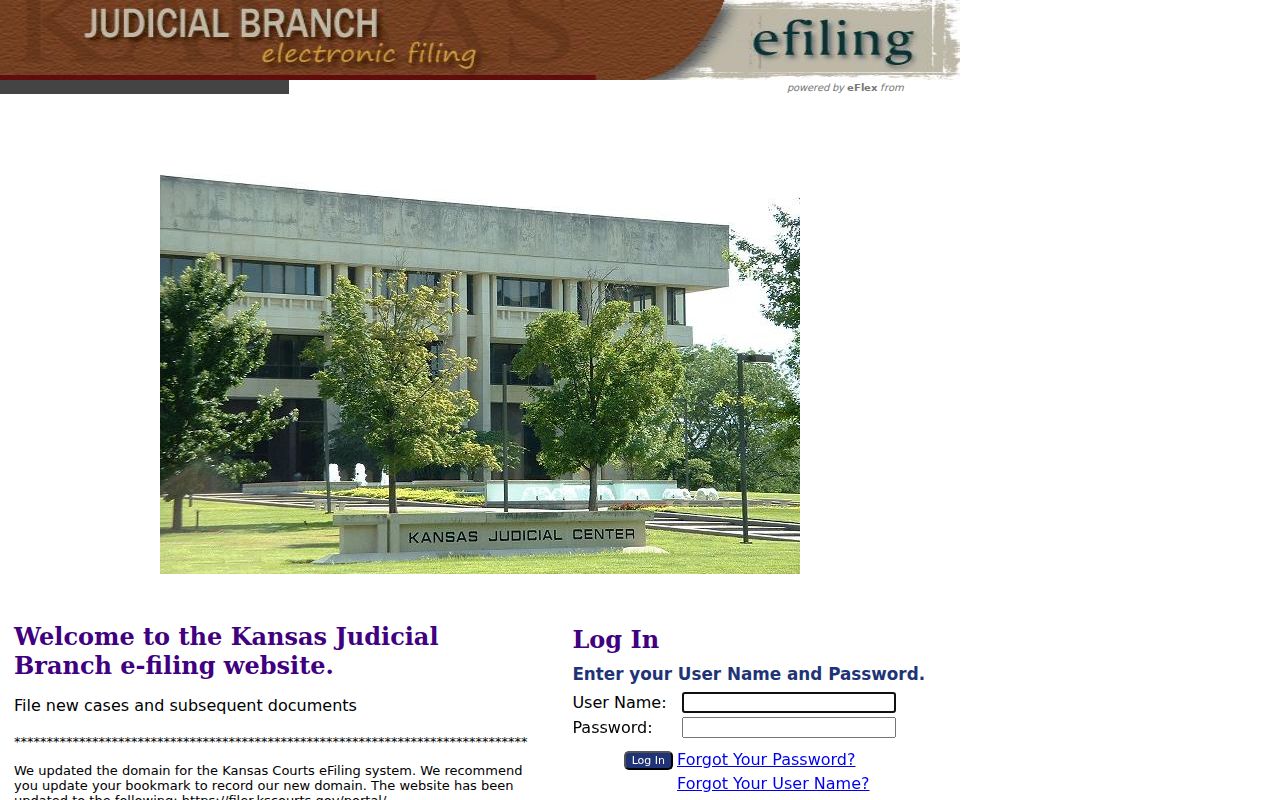
Note that the filing portal stands apart from CaseSearch, the public terminal, and the clerk copy route in Sumner County.
Certified Copies and Fees
A plain copy just reproduces a public item. A certified copy carries the keeper's attestation. The clerk posts no Sumner-specific copy or certification prices, so request a current estimate; K.S.A. 45-219 permits charging actual reproduction, staff, service, media, and delivery costs.
| Item | Official finding |
|---|---|
| CaseSearch | No guest search fee displayed; not certification |
| Public terminal | No fixed printing amount located |
| Plain copy | Current Sumner amount not located |
| Certified copy | Ask for current per-page and certification total |
| Staff time or delivery | Actual charges may apply |
| PACER document | $0.10 per page, generally capped at $3; federal only |
Plain and Certified Sumner County Copies
Pick the copy type before you pay. A portal screen can omit the file stamp, certification, seal, page count, and attachments. Confirm what the receiving office needs. It may want a certified judgment, a certified journal entry, a register printout, or another named paper, and the district clerk cannot certify city or federal records it does not keep.
For mail, include a return address and ask how payment follows the estimate. For pickup, confirm the copy is ready. A hard-to-read scan is worth a question about a better reproduction or controlled inspection of the original. Rule 106 keeps originals in court custody.
Public Access and Sealed Records
Kansas law welcomes inspection. Free downloads are not guaranteed. Rule 22 opens portal and terminal routes while excluding sensitive categories, and the Kansas Open Records Act frames requests, permits lawful charges, and recognizes exemptions.
Key rules:
Kansas Supreme Court Rule 22 governs public electronic case records, exclusions, and no-bulk access.
K.S.A. 45-218 governs inspection, copying, and requests.
K.S.A. 45-221 lists exemptions from disclosure.
Some matters carry restrictions. Adoption, juvenile, expunged, grand-jury, and protection cases top that list. Material missing online may be terminal-only, municipal, older, or filed under a different format. Call the office before deciding nothing exists. Rule 22 bars clerk-compiled bulk distribution under the terminal rule. Keep every request tied to a specific case and document.
Completeness Checks for Sumner County Court Files
A docket line may name a document yet never show its PDF. So once you hold a copy from the Sumner County clerk, check it. Compare it against the register entry itself. Match the case number, the title, the filing date, the page count, and any attachments. Check those items listed in the event description. Something missing does not always mean something withheld.
Ask the clerk why material is left out. It could be restricted, redacted, or stored in an older format. It could also be kept through a separate transcript procedure. A certified copy should arrive with its certification page intact. It should also carry any clerk seal or file stamp. When a scan is illegible, request a better official reproduction instead of editing the image yourself. Older court records may need the court or an archive to confirm the series. The archive can also confirm the proper reproduction route. These steps tell an incomplete portal view apart from a complete official response to your court records request.
Choosing the Correct Sumner County Custodian
For Sumner County District Court cases, the district clerk holds the file. That covers district criminal, civil, family, probate, juvenile, traffic, small-claims, and magistrate matters. So most Sumner County court docket requests start there. A municipal clerk keeps that city's ordinance and municipal traffic file. The Kansas Bureau of Investigation runs a separate criminal-history product. The law-enforcement agency that made an arrest maintains its own incident records. Land, deed, and tax material sits with other county offices. None of that related material automatically turns into a district court document.
Pick the right office by reading the caption and case number. A city citation names its municipality. A newer Sumner district number may carry the SU county prefix. A federal caption goes to the federal clerk through PACER. When the source is unclear, describe to the district clerk exactly what appears on the document. Ask for routing rather than blasting a broad request to several offices at once.
Certification follows custody too. Oxford can certify an Oxford municipal record it maintains. The Sumner district clerk certifies a district judgment. An archive reproduces material in its own collection under its own process. Getting the right document from the right holder spares you a copy that is informative but useless for the formal purpose you needed.