
How to Search Criminal Dockets
Kansas CaseSearch is the statewide public entry point for Sumner County criminal docket information. Accept the terms, choose District, then choose Case Number or Party Name and set County to Sumner. The Criminal case-type filter and file-date fields can narrow a broad result set. A human check must be completed before the form submits.
A case number is the best locator. Kansas materials show several eras, including older forms such as 14 CR 11 and newer county-prefixed formats. These examples are clues, not a complete Sumner code glossary. A party search can find a case when the number is unknown, but spelling and date differences may produce extra results.
- Open CaseSearch, accept its terms, and choose District.
- Select Case Number or Party Name, enter the term, and choose Sumner County.
- Apply the Criminal filter and a file-date range only when needed.
- Read the events from the filing through the latest setting and disposition.
- Call the clerk or use the courthouse terminal if public material is absent online.
Sumner Criminal Search Fields
The live form separates Court, Search Type, Search Term, County, and Case Type. That order matters. Appellate selects a different court layer, while Citation Number addresses a citation-led search. Business Name and Party As Business Name are distinct options. Reset the form before switching to a different county or case type.
| Control | Sumner choice | Why it matters |
|---|---|---|
| Court | District | Routes to trial-court cases |
| County | Sumner | Limits the statewide index |
| Case Type | Criminal | Separates the criminal category |
| File dates | Optional range | Narrows filing dates, not hearing dates |
The portal is for public case information. Kansas Judicial Branch eFlex is the filing system for attorneys and authorized filers, not a public criminal docket search.
What a Criminal Docket Shows
A Sumner County events index ordinarily identifies the court, case number, case type, filing date, public party roles, counsel, assigned judge, charges as filed, scheduled events, motions, orders, and an outcome label when public. It is a navigation record, not the complete certified file. A charge line records an allegation; it does not establish guilt.
| Case Number | A unique locator, with older and newer formats in use. |
|---|---|
| Charge(s) | Offense description, degree, and statute when publicly shown. |
| Hearing Settings | First appearance, arraignment, pretrial, trial, or review dates. |
| Plea | The entered plea, separate from the final result. |
| Disposition | Dismissal, diversion, acquittal, plea, or conviction when public. |
Sumner Charges Need Context
A filed charge, warrant entry, bond condition, motion, or hearing setting is a procedural fact, not a final conclusion. Read forward to the disposition and sentence fields. Even then, an abbreviated outcome may need the journal entry or sentencing order to explain what the judge decided.
Read the sequence: a motion filed is not a motion granted, a hearing set is not a hearing held, and a warrant entry is not a conviction.
When the public index lacks the explanatory document, identify its title and filing date, then ask the Clerk of the District Court for access or a copy. Compare the disposition date with later sentencing, probation, restitution, compliance-review, and appeal entries because the procedural history can continue after the main judgment. Use the record's own labels and request the written order when a short event description remains unclear.
Stages on a Criminal Docket
A district criminal record may begin with a complaint or other charging entry, followed by first appearance, counsel and bond entries, arraignment, pretrial motions, and hearings. A felony matter can include a preliminary hearing or waiver before plea negotiations or trial. The record may continue after judgment with sentencing, probation, restitution, review, post-judgment motions, or appeal.
Docket flow: Charge Filed › Arraignment › Pretrial Settings › Plea or Trial › Disposition
Sumner Court Layers Matter
Felonies and misdemeanors prosecuted under Kansas law belong in Sumner County District Court. A district magistrate judge may handle lower-level or preliminary work, but the file remains within the unified district-clerk structure. A Wellington, Belle Plaine, Conway Springs, Oxford, or Caldwell ordinance case remains with that city's municipal clerk unless an appeal creates a district-court record.
This split explains why repeating a district CaseSearch query may never find a city-only citation. Start with the court named on the notice. For broader lookup mechanics, the Sumner County case search page explains the statewide fields and court selector.
Which Court Holds Criminal Dockets
The Sumner County District Court, 30th Judicial District, sits at 501 N. Washington, Wellington, Kansas 67152. Its clerk can be reached at 620-326-5936. The office holds district criminal records, while municipal clerks hold their ordinance and city-traffic records. Kansas Court of Appeals records use the Appellate route in CaseSearch.
Public access channels include CaseSearch, the courthouse public terminal, the clerk counter, telephone confirmation, and a specific written request by mail, fax, or the Kansas Open Records Act form after the custodian and any charge are confirmed. No public bulk Sumner criminal export was located.
When Sumner Results Are Missing
An absent result does not prove that no case exists or that it was sealed. Check the case-number format, spelling, District selection, Sumner County filter, Criminal filter, and file-date range. Then ask whether the matter is municipal, older than current online coverage, available only at the courthouse terminal, or restricted by law.
The Kansas Courts district-records explanation distinguishes case information from documents and points to courthouse-terminal access. The official guidance reinforces why a missing online attachment should lead to the clerk, not to a conclusion about the case.
When calling the Sumner County clerk, give the court name, approximate filing year, case type, and any exact number from the notice. Ask whether the public information is online, terminal-only, held in an older paper file, or maintained by a municipal clerk. If the desired item is a judgment, sentencing entry, dismissal, or register printout, name it and request the current plain-copy or certification cost. A focused request helps the clerk locate the right record while preserving the access limits that apply to protected documents and parties.
Public Access and Sealed Criminal Dockets
Kansas Supreme Court Rule 22 permits public access to eligible case records and events indices through the portal and courthouse terminal, but it excludes sensitive cases and documents. Juvenile, child-in-need-of-care, grand-jury, expunged, and specified protection matters are among the restricted categories. Some public case information may remain visible even when a document is not online.
Key rules:
Kansas Supreme Court Rule 22 governs portal and terminal access and identifies exclusions.
K.S.A. 21-6614 addresses expungement of qualifying records.
K.S.A. 45-218 supplies the specific-record inspection and copying route under KORA.
The current juvenile-record statute is shown in the source image below. It illustrates why criminal and juvenile access rules must not be blended.
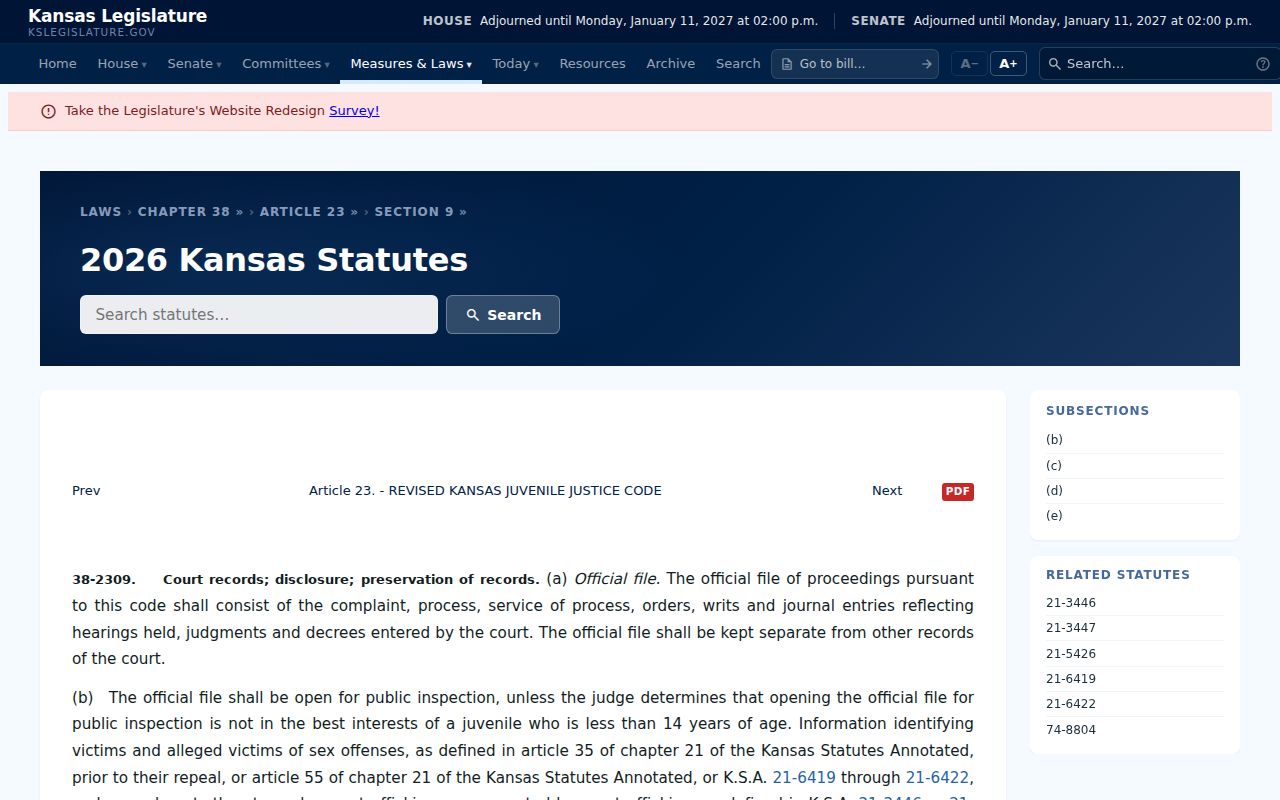
The statute image supports the access boundary, while the clerk and current order control any case-specific request.
Sumner Expungement Boundaries
The Kansas expungement provision appears in the next source image. Expungement is not the same as an ordinary portal omission, and disclosure turns on the statute and court order.
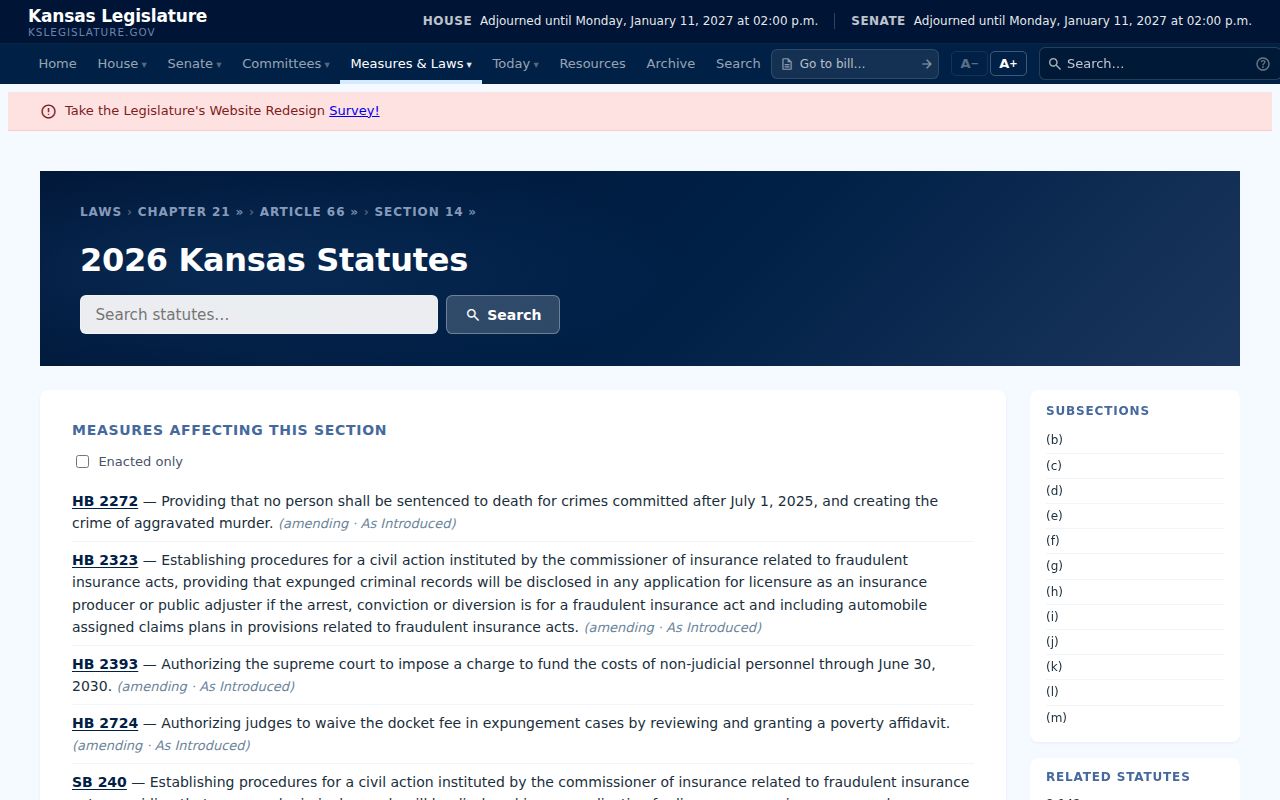
The image underscores why searchers should ask the clerk about the legal access status rather than trying alternate names to bypass a restriction.
The current failure-to-comply statute is also captured below because some citation matters can create later court events.
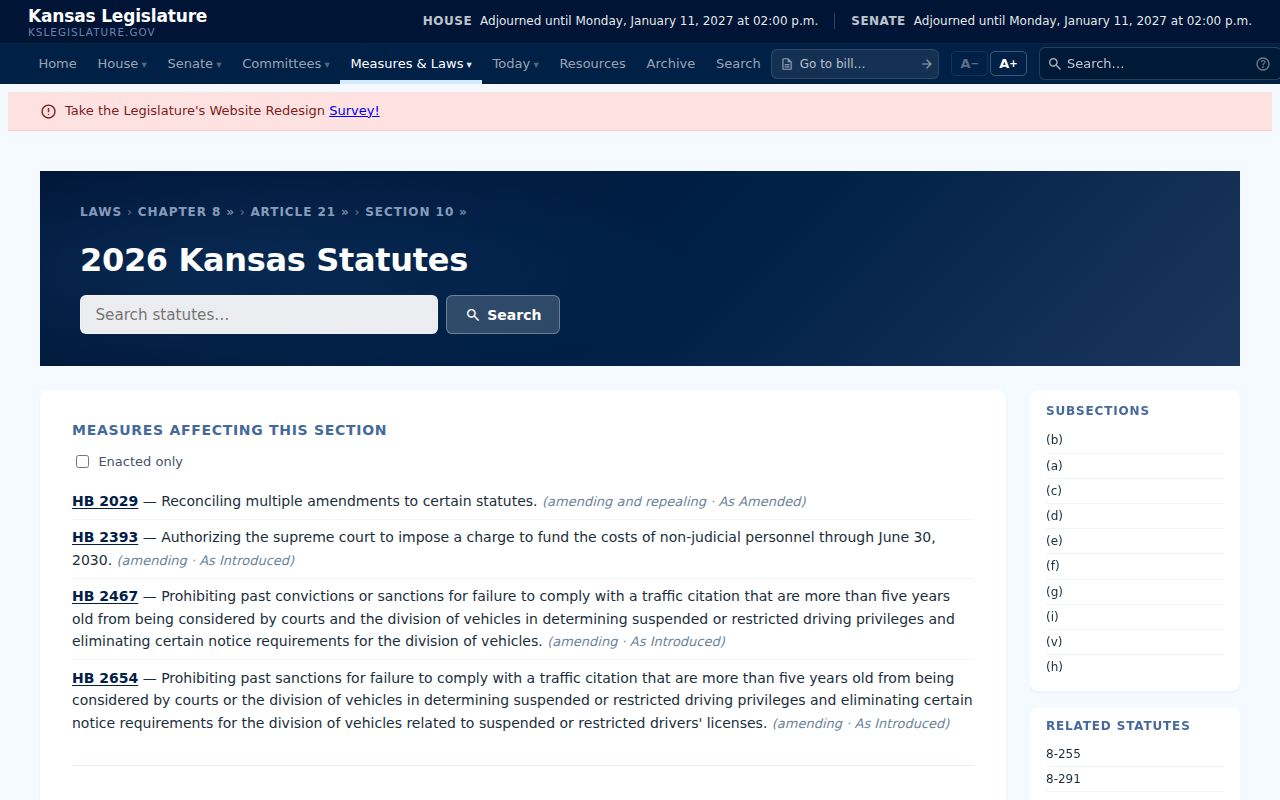
That source belongs to citation procedure, not proof of any person's criminal outcome, and the docket must still be read through its latest entry.